
Creating Like a Child: Basquiat’s Art Manifesto
True art emerges not from flashy galleries, but from the heart of life itself. Jean-Michel Basquiat, who rose to fame with his street drawings, was exactly that kind of artist: one who questioned the rules rather than learning them, and who brought life itself to the canvas rather than merely talking about art. His works are not merely ideas belonging to the art world; they serve as a powerful mental invitation for anyone who wishes to create, be free, and express themselves. Because Basquiat’s true concern was not making art, but being able to present the life he lived in an uncensored manner. Perhaps that is why he still prompts us to ask this question today: Does true creativity begin with mastery, or with remembering how to be a child again?
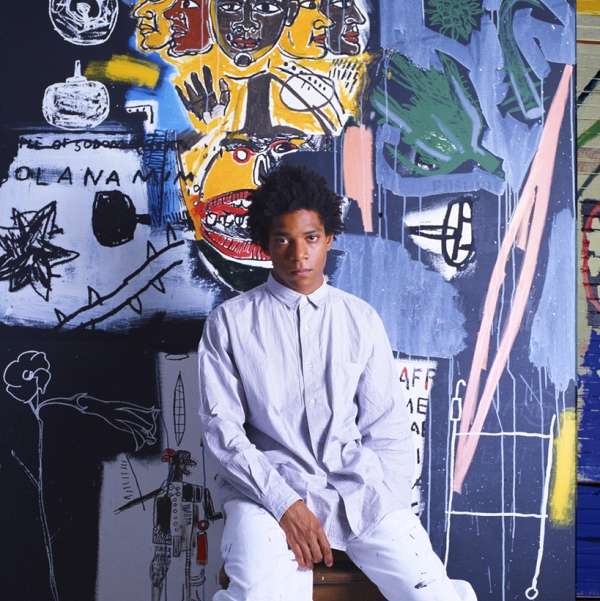
For Basquiat, art is not an intellectual object to be pondered; it is a form of energy that overflows from life itself. The statement, “When I work, I don’t think about art; I think about life,” lies at the heart of this approach. According to him, art should be the result of life, not its purpose. The statement “I am not a Black artist; I am an artist” is a challenge not only to identity politics but also to the art world’s habit of categorization. Basquiat opposes the external definition of an artist’s identity; he views the freedom of art as equal to the freedom of the artist. His dismissal of the roles of galleries, critics, and art authorities is an extension of the same idea: The value of art is determined not by institutions, but by direct experience.
The common thread in his art is the conscious defense of childlike freedom as a deliberate choice. When Basquiat expresses his admiration for children’s drawings, he is not praising their technical shortcomings, but rather their unfiltered power of expression. In his view, what we lose as we grow up is not talent, but courage. That is why his desire for his paintings to look like children’s work is not a regression; it is a yearning for mental liberation. If Basquiat’s philosophy of art were to be distilled into a single sentence, it would be this: True art arises not from learned mastery, but from preserved purity.
Basquiat’s Most Memorable Quotes
The more I paint the more I like everything.
-
I like kids’ work more than work by real artists any day.
-
I don’t think about art when I’m working. I try to think about life.
-

I am not a black artist, I am an artist.
-
I wanted to be a star, not a gallery mascot.
-
I want to make paintings that look as if they were made by a child.
-
I don’t listen to what art critics say. I don’t know anybody who needs a critic to find out what art is.
-
Since I was seventeen I thought I might be a star. I’d think about all my heroes, Charlie Parker, Jimi Hendrix… I had a romantic feeling about how these people became famous.
-
Believe it or not, I can actually draw.
-
I’m not a real person. I’m a legend.
-
On Creativity and Motivation, Inspired by Basquiat’s Words
Basquiat’s words carry a powerful message of motivation not only for artists but for anyone striving to create: Creation is the path to understanding who we are. The statement, “The more I paint, the more I love everything,” shows that motivation is not, as we often think, the starting point. Inspiration doesn’t come first; action does. As a person creates, their relationship with the world changes, and their sense of meaning expands.
Another important lesson is breaking free from dependence on external validation. Basquiat’s distance from critics actually suggests a form of psychological freedom: If we constantly leave the value of what we do up to others’ judgment, we surrender our creative energy. For motivation to be sustainable, the individual must develop internal standards. In other words, the compass of creation should be curiosity, not applause.
Finally, Basquiat reminds us of this paradox: Great works are often created by people who don’t take themselves too seriously. His desire to create like a child demonstrates the power of a mindset that allows for mistakes. Because the greatest enemy of creativity is not failure, but the effort to appear in control. Basquiat’s legacy lives on not only in his paintings but in this idea: Becoming a legend comes not from appearing flawless, but from being yourself.
The Life and Art of Jean-Michel Basquiat
Jean-Michel BasquiatJean-Michel Basquiat is regarded as one of the most groundbreaking figures in 20th-century art, whose fame reached legendary status in a remarkably short time. Born in 1960 in the Brooklyn neighborhood of New York, Basquiat was the son of a Haitian father and a Puerto Rican mother. Growing up in a culturally diverse environment instilled in him, at an early age, the themes of identity, belonging, and social inequality that would later form the core language of his art. An anatomy book his mother gave him during a car accident he suffered as a child became a pivotal moment that sparked his interest in the human body and symbols.
Beginning in the late 1970s, Basquiat drew attention with the graffiti he created on New York streets under the signature “SAMO,” launching his art career not from galleries but from the streets. For him, the city was a canvas; the walls were the spaces where he brought his thoughts directly to life. He quickly captured the attention of the underground art scene and, thanks to his energetic, raw, and unfiltered style, rapidly rose to the center of the art world. In his paintings, words, symbols, figures reminiscent of children’s drawings, and historical references intertwine, drawing the viewer into both a visual and intellectual flow.
Basquiat’s art was rooted in freedom of expression rather than technical perfection. In his works, he brought together the rhythm of jazz music, the chaotic energy of street culture, and social criticism. In particular, his admiration for jazz legends—references to figures like Charlie Parker and Dizzy Gillespie—infused his works with a musical tempo. His paintings were not merely images; they were visual reflections on identity, power, history, and stories left unseen.
Gaining international fame in the 1980s, Basquiat became one of the rising stars of the art world at a young age, and his collaborations with the era’s pop art icon, Andy Warhol, generated significant buzz. However, the pressure of his rapid rise, intense public attention, and personal struggles made life difficult for the artist. When he passed away in 1988, at the age of just 27, he left behind not only paintings but also a profound question about what art could be. Andy Warhol ile yaptığı iş birlikleri büyük yankı uyandırdı. Ancak hızlı yükselişin getirdiği baskı, yoğun ilgi ve kişisel mücadeleler sanatçının hayatını zorlaştırdı. 1988 yılında, henüz 27 yaşındayken hayatını kaybettiğinde ardında yalnızca tablolar değil, sanatın ne olabileceğine dair köklü bir soru bıraktı.
Today, while Basquiat’s works are exhibited in the world’s most important museums, his true legacy lies not in technique but in an attitude: the idea that art is born not within elite boundaries, but right in the midst of life. Despite his short life, Basquiat demonstrated that an artist is not merely a creator of works but a storyteller who brings the spirit of his era to light. That is why he is no longer just a painter; he is one of the most powerful symbols of modern art.
Jean-Michel Basquiat’nın Sanat ve Hayat Üzerine Söylediği 10 Çarpıcı Söz – Jean-Michel Basquiat Kimdir? Sözleri ve Sanat Felsefesi – Basquiat’nın Sözleri: Yaratıcılık, Özgürlük ve Sanat Üzerine Dersler – Jean-Michel Basquiat’nın İlham Veren Sözleri ve Anlamları – Basquiat’ya Göre Sanat Nedir? Yaratıcılığın Asi Felsefesi